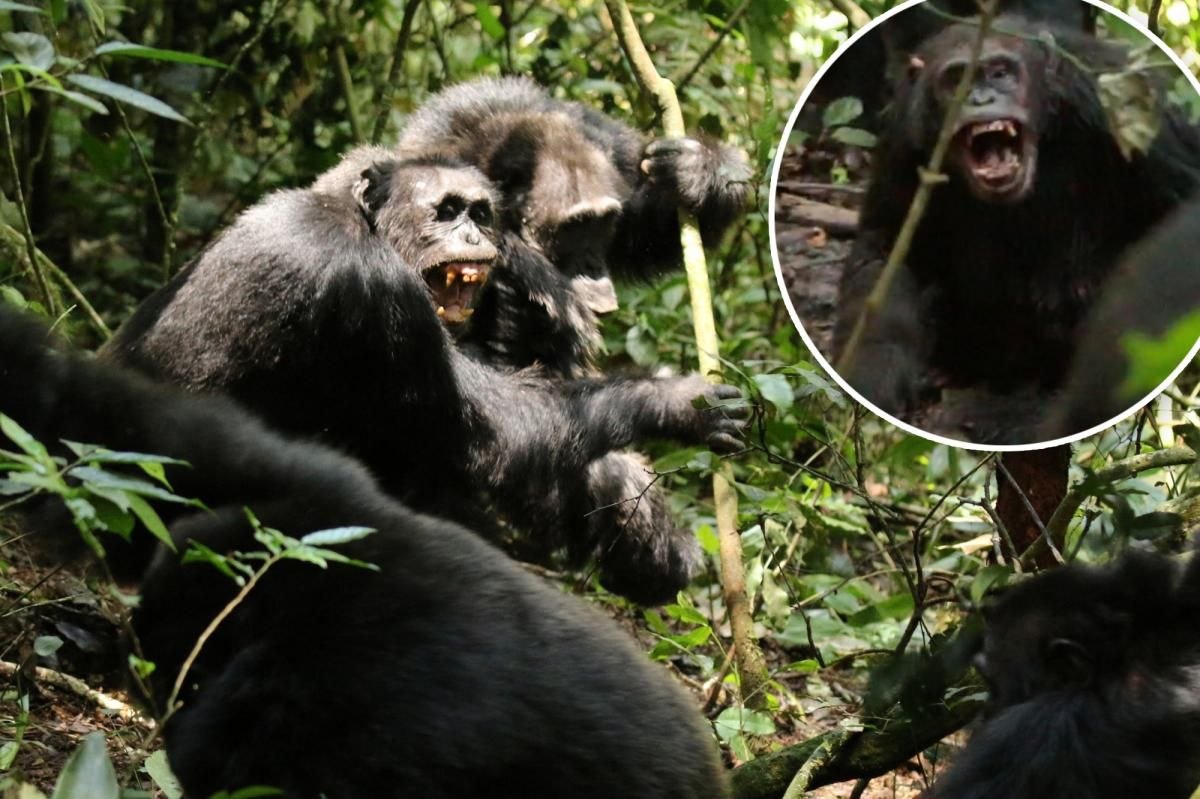
In a rare and disturbing look into primate behavior, researchers have discovered that the world’s largest known community of wild chimpanzees has fractured into two warring factions, engaging in a violent "civil war" that has lasted for years.
The Ngogo chimpanzee community, located in Uganda’s Kibale National Park, was once a remarkably peaceful and unified group. However, since 2018, scientists have documented a total of 24 killings within the community—including 17 infants—as former allies turn into deadly enemies.
From Allies to Enemies
According to the study published in the journal Science, the intensity of the violence has shocked the scientific community. Aaron Sandel, an anthropologist at the University of Texas and co-director of the Ngogo Chimpanzee Project, noted the heartbreaking shift in social dynamics.
- Broken Bonds: "These were chimps that used to hold hands," Sandel remarked. "Now, they are trying to kill each other."
- Territorial Nature: While chimpanzees are naturally territorial and often hostile toward outside groups, they usually maintain internal harmony. The Ngogo group had lived together in a community of nearly 200 individuals for several decades before the split.
- Xenophobic Traits: Sandel described the animals as possessing a natural "fear of the unknown" regarding outsiders, but the fact that this aggression has turned inward is what makes this conflict so unique.
What Triggered the Conflict?
While the exact cause of the civil war remains unclear, researchers are closely studying the timeline. The rift began to form in 2018, leading to a permanent geographic and social separation. The group has now divided into "Eastern" and "Western" factions, with frequent violent border skirmishes occurring along the new territorial lines.
Biologists believe that the sheer size of the original Ngogo community may have played a role. At nearly 200 members, the group was three times larger than most average chimpanzee communities, making social cohesion difficult to maintain over time.
Insights into Human Nature
The study suggests that observing the duration and brutality of this chimpanzee conflict could offer vital clues into the evolutionary roots of human warfare. By analyzing how these primates identify "us" versus "them" after years of brotherhood, researchers hope to better understand the biological foundations of group conflict and the origins of organized violence in human history.
Currently, the Ngogo Chimpanzee Project continues to monitor the two factions, documenting a tragic yet fascinating chapter in primate evolution where the line between friend and foe has been permanently erased.
Ephrem Ageru
Senior Editor at TrendStorm. Monitoring the pulse of the internet 24/7 to bring you the fastest breaking stories in tech, viral culture, and world news.